Deals at Cenote Maya Muyil (1)
Contact
- 📞 +529841517570
- 📷 @mayamuyilcenote
### What to Expect on Your Visit
The standard tour is a guided visit of approximately 3 hours led by a local Mayan guide. The itinerary covers jungle trails, the ruins of Muyil—including its 17-meter pyramid El Castillo and the sacbé (ceremonial road) leading to the lagoons—and swimming in open-water cenotes. The atmosphere is calm: small groups, dense vegetation, and wildlife from the biosphere reserve in place of music and vendors.
### The Cenotes and Lagoons
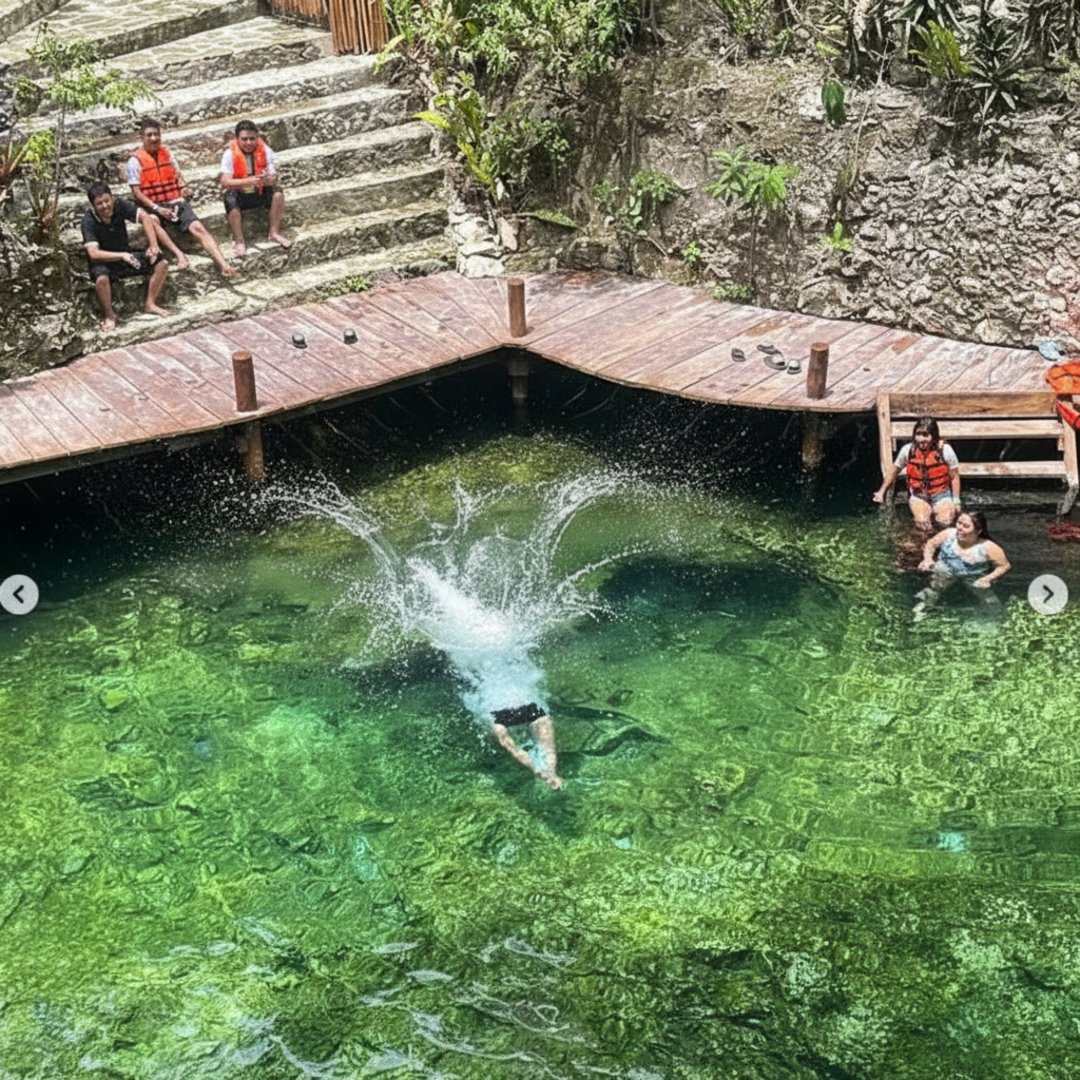
The area's aquatic formations include Cenote Corazón del Paraíso—named for its shape when seen from above—and Laguna Kaan Luum, both suitable for swimming and snorkeling. There is also the option of floating through mangrove channels to Laguna Chunyaxché or all the way to the sea at Boca Paila, either by boat or drifting with the current, a journey that can last up to 5 hours. These are the same channels the Maya used as trade routes centuries ago.
### Context of the Muyil Archaeological Site
Muyil—also known as Chunyaxché—is one of the oldest Mayan settlements on the Caribbean coast and one of the few with continuous access to the sea through natural channels. The observation tower overlooking the Sian Ka'an jungle offers a perspective rarely found at other archaeological sites in the region: from the top, you can see the jungle canopy, the glittering waters, and on clear days, the Caribbean horizon.
## Why Repeat Visitors to Tulum Choose It
In a destination where the most well-known cenotes operate at near-industrial capacity, Muyil offers a quieter alternative. The combination of Mayan history, a biosphere ecosystem, and swimming in natural waters—all within a single day trip—is hard to match elsewhere. Booking through El Dato also gives visitors access to a local rate for those who want activities in Tulum without paying the standard tourist office price.
### Birdwatching and Wildlife
The setting within Sian Ka'an makes every visit a chance to spot local wildlife: herons, toucans, crocodiles in the canals, and with a bit of luck, howler monkeys in the trees near the ruins. Wooden boardwalks over the aquatic vegetation keep the walk comfortable without disturbing the ecosystem.
Frequently asked questions
- Do I need to book in advance or can I just show up?
- Advance booking is recommended, especially during peak season, as the tour requires a guide and has a minimum group size of two people. Arriving without a reservation may mean no tour is available that same day, particularly on weekends or during the busiest months in Tulum.
- Does the tour include the Muyil ruins or are they a separate visit?
- It depends on the package you choose. Many tours combine access to the Muyil ruins with the cenotes and lagoons in a single outing. The archaeological site has its own entrance fee. Please confirm at the time of booking which elements are included in your specific tour.
- What level of physical fitness is required?
- The standard tour is accessible to most travelers: hiking along jungle trails on relatively flat terrain and swimming in calm waters with no strong currents. Floating through the canals requires no significant physical effort. Extended boat trips are not recommended for people with mobility issues without prior consultation.
- Are the waters of the cenotes safe for swimming? How cold are they?
- The filtered groundwater in the cenotes holds a steady temperature of around 24–26°C—refreshing but not cold. It is clean karst-origin water with no dangerous currents. To protect the ecosystem, conventional sunscreen is not recommended; use only biodegradable sunscreen.
- Are there any offers or discounts available for visiting?
- Yes, a local rate is available for this tour through El Dato, which differs from the standard tourist price. You can check the details of the current offer directly on the El Dato platform before booking.
- What should I bring for the visit?
- The essentials: swimsuit, towel, comfortable hiking shoes (not just beach sandals), biodegradable sunscreen, plenty of water, and insect repellent. If you are planning a boat or canal tour, consider bringing a change of dry clothes. A waterproof camera or dry bag is also a good idea to protect your gear.